BlogWhat electricity transmission network consist of?
Structural Features of the Transmission System
As mentioned in the previous article, "How does electricity reach your home?", the transmission system spans over long distances and operates at high voltages (230kV and higher). Closer to the populated areas high voltages pose risks of instigating fires and electrocuting people. Therefore, proper mitigation actions need to be taken to ensure safety of the environment and people. This is achieved by insulating high-voltage equipment, digging underground tunnels and/or using other solutions to safely and efficiently bring power to the consumers. As one can deduce this adds considerable costs to the design of the power system. The greater energy efficiency of high voltage and low current must therefore be weighed against safety and capital cost.
Key Equipment in the transmission system
Transmission lines (circuits) - conductors that carry electrical current, or through which power flows. They are usually overhead lines (OHLs) but can also be underground cables. Typical materials are aluminium, often reinforced with steel for mechanical strength, and copper respectively. Low resistance is generally desirable for power lines to minimize energy losses, but also because heating limits the conductor’s ability to carry current (in other words less power can be delivered to the end consumers).
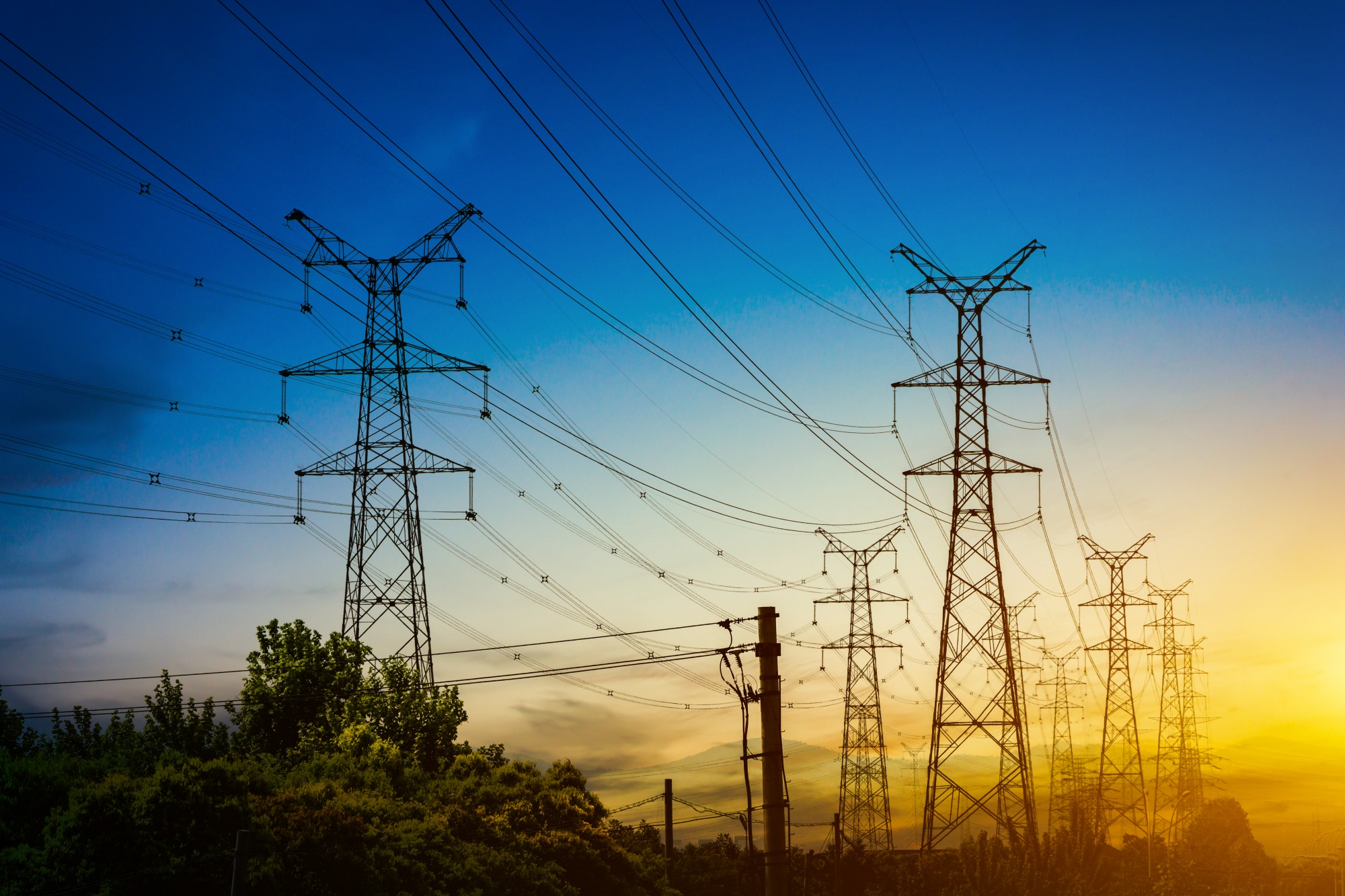
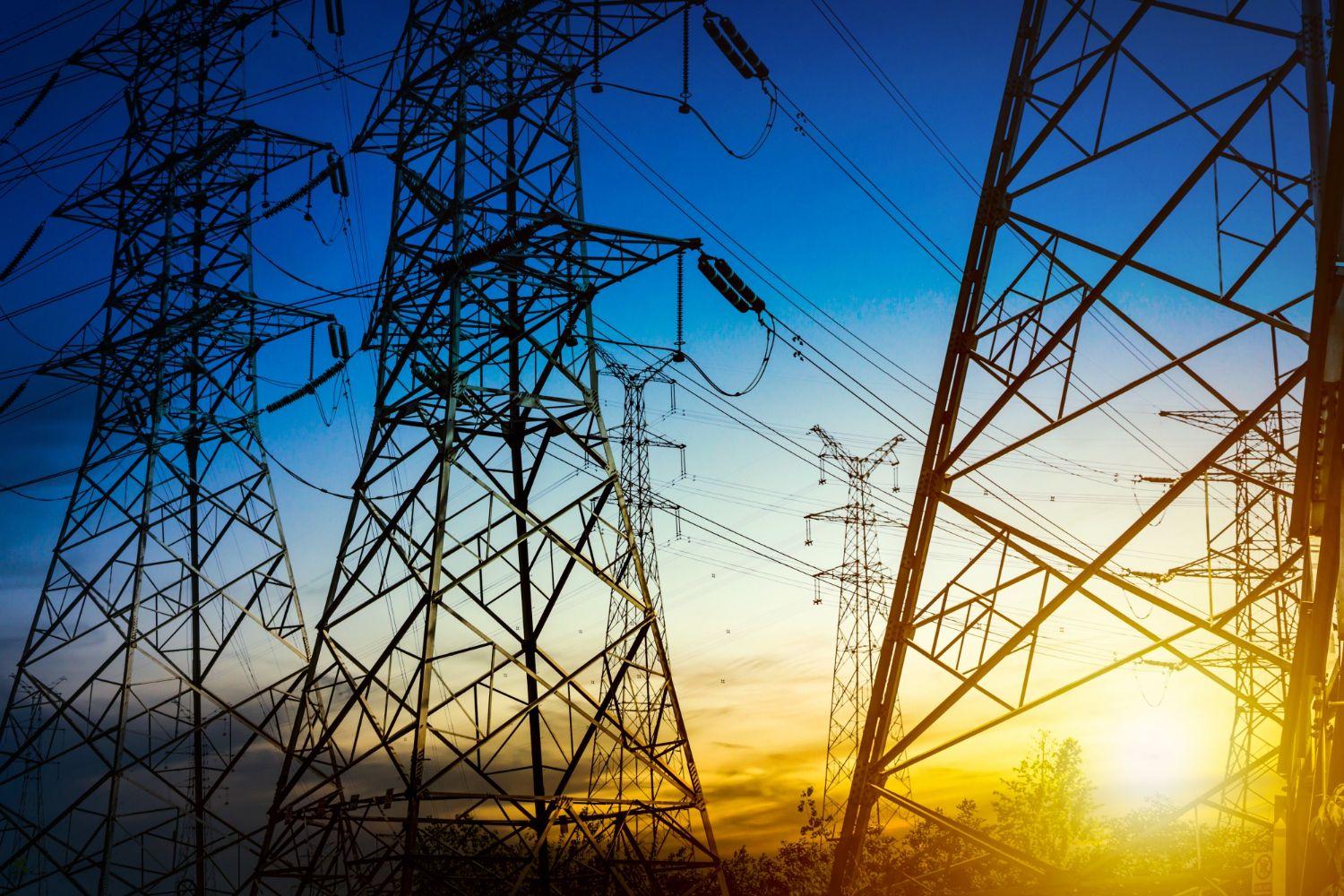
Pylons or transmission towers - structures that support overhead lines usually made of metals (typically steel).
Substations - points in the network where generators connect to the electricity grid, voltages stepped-up or stepped-down with the use of transformers, and circuits are interconnected (connect to one another). They also house other key equipment such as protection devices, control rooms, etc.
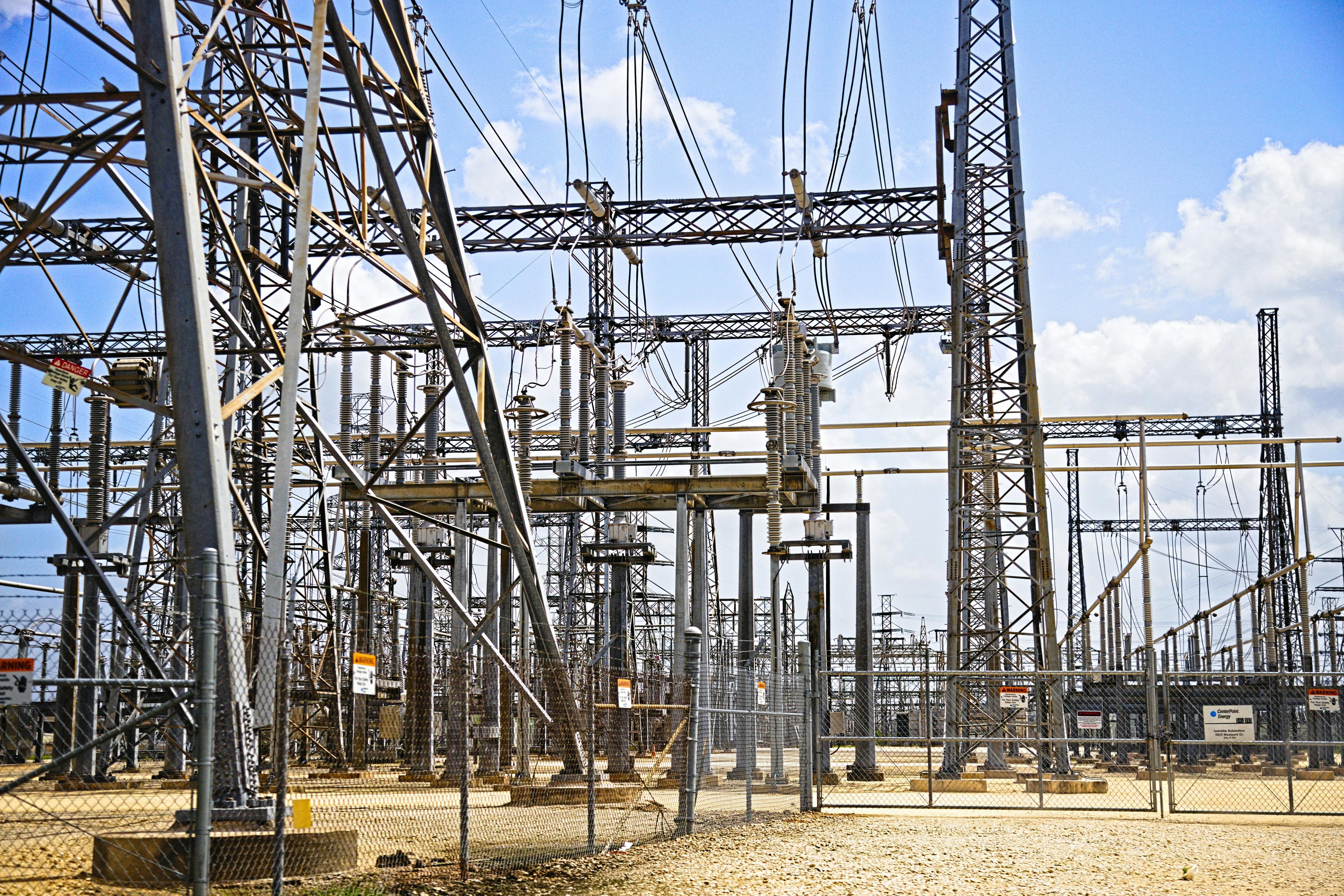
Transformer - equipment that allows to increase (step-up) or lower (step-down) the voltage in the system. This gives great flexibility to operate different parts of the system at different voltages.
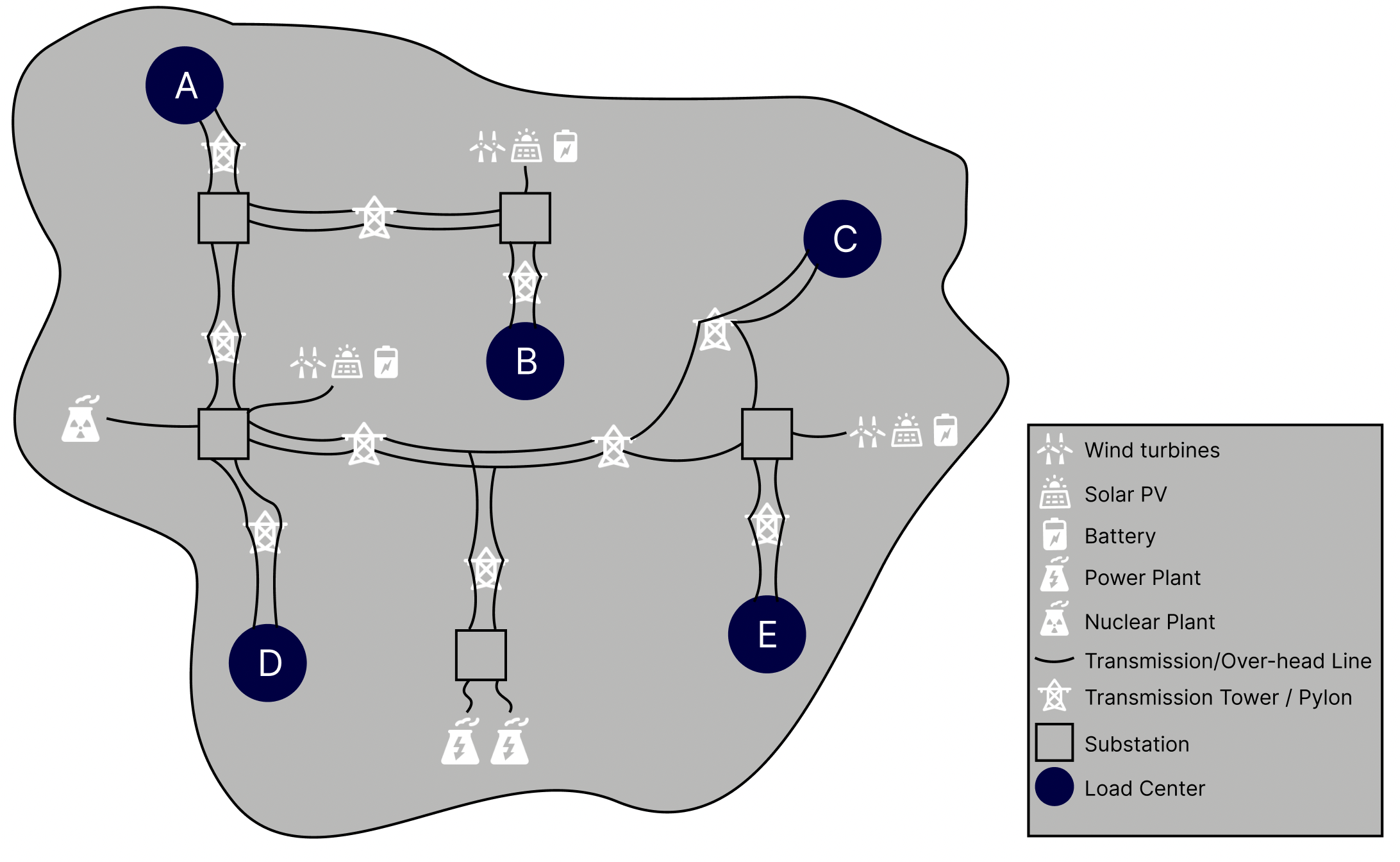
The figure below shows an illustrative example of the fictional electricity grid/network with some of the key equipment. It can be seen that power producers (renewable energy sources, power plants, and nuclear power plants) are connected to substations so that their generated power can be transmitted across the network to the end consumers. Transmission lines carry that power to different load centers. Furthermore, resilience and reliability are increased by interconnecting the network.